Trapping can be a good option when looking to control rats and mice as they are effective and negate some of the risks associated with other methods such as baiting. They are easy to use and don’t require specialist attractants as everyday household goods can be used as bait.
There are also a variety of different traps available, from the more traditional snap traps to more modern electric rodent killers so there will be an option to fit your specific needs.
In this article, we will give an overview of some of the options available and provide some tips as to how they can be used effectively.
Options Available
Snap Traps
Snap traps are probably the first thing that springs to mind (no pun intended) when you think of rat and mouse traps. They will have a trigger plate which is baited with food (such as peanut butter) which is attached to a spring. The spring is then attached to a bar which slams down on the rodent when it applies enough pressure to the trigger plate.
There are a variety of these traps available. Some are made from wood, some from metal and some from plastic which allows users to pick the most appropriate type depending on factors such as their budget, where the trap will be located (i.e. if it will be subjected to adverse weather conditions) and whether the trap will be used multiple times, such as for larger infestations.
One key point to consider is the size of the trap. Mouse traps will be smaller in size whilst rat traps are larger, owing to the respective sizes of the target pests. They may also have different sensitivity levels on the triggering plates to help ensure the rodent cannot eat the bait and run off without the trap activating.
Electronic Traps
These are a more modern type of trap and operate by luring the rodent in and then electrocuting it, killing them instantly and humanely. Some also include an attached compartment to store the dead carcass so the rat or mouse can be disposed of without the user having to touch it.
The effectiveness of these traps can vary. They may be a good option if rodents have become suspicious of other types of traps and actively avoid them. They are also enclosed which can provide an area of ‘shelter’ for the rodent to feed which may be more likely to entice them in. However, as rats are naturally suspicious and these traps are far from what would normally be found in their environment, they may avoid them for some time so it’s crucial enough time is given to allow them to get more comfortable and venture inside.
Some argue that electronic traps are more humane than other types, owing to the fact that they should deliver a humane, instant kill. This negates some of the risks of traps such as a snap trap which, although it should kill instantly, can end up only injuring the rodent (for example if it clamps down on a limb).
Live Capture Traps
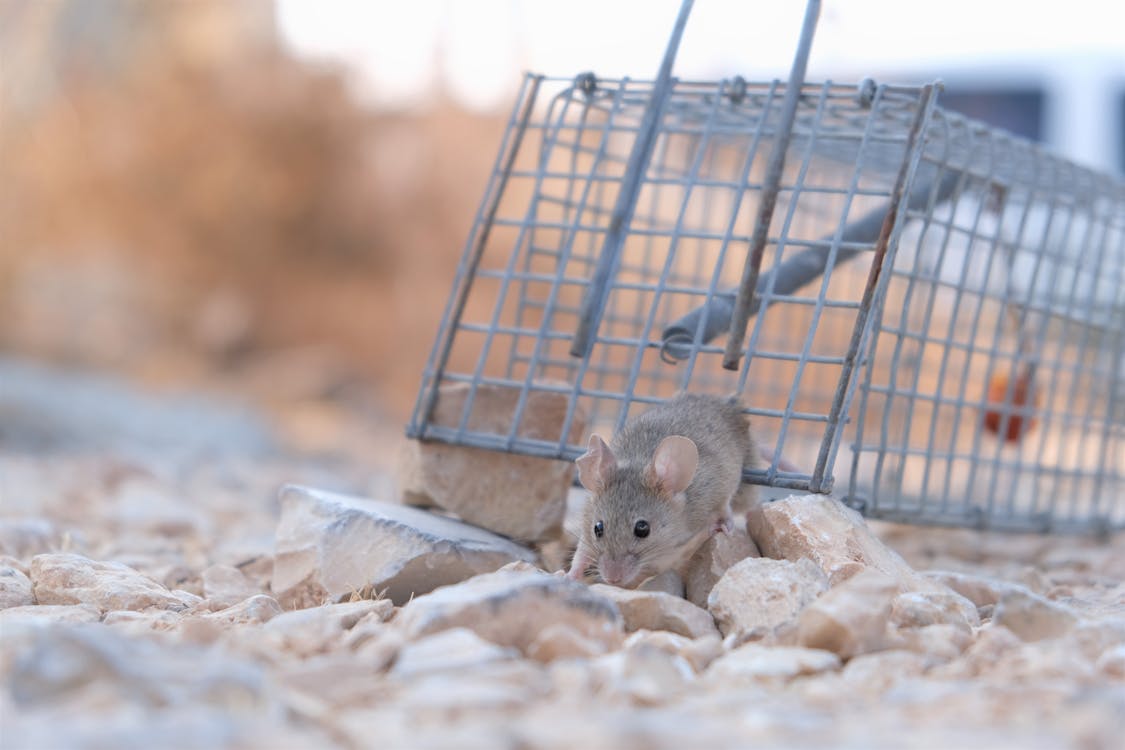
As the name suggests, live capture traps or ‘catch and release traps’ work by enticing a rodent into an enclosed area which then activates a trigger, and a door closes behind them. The rodent is then kept in the trap, alive, whereby it can be relocated and released away from the affected area.
When looking to release them, they must be located an adequate distance away from your property as well as any other property where they may become a nuisance (they can find their way back to their nest if they are relocated too nearby).
What’s also important is that you check the traps regularly. Although some argue they are more humane as they negate the need to kill the captive; by being trapped they can experience undue levels of distress. By checking the trap at regular intervals, the risk of this can be reduced.
Suggestions For Effectiveness
Size of Infestation
The use of traps is generally more effective when the size of the infestation is small. You can employ more traps with larger infestations, however it’s more than likely you will need to explore other methods for effective results.
Trap Size
It’s imperative that you pick the right size trap depending on whether you are targeting rats or mice. The trap bar needs to be big enough to hit the target in the correct position and kill them (rather than injure them) and the sensitivity on the trigger plate needs to be correct otherwise your risk the rodent running off with the bait without the trap activating.
Location of Traps
An obvious but critical factor in ensuring effective results is making sure the traps are located in the correct places. These will be where there are signs of rodent activity such as nests or where there are droppings, gnaw marks or greasy stains.
They should also be placed on sheltered travel routes the rodents use to travel between where they nest and where they look for food. These will normally be along walls, in pipes or along areas of debris and sheltered vegetation. Other sheltered areas where there is activity can also be a good spot, such as behind appliances.
Remember that rats and mice will rarely venture out into the open to feed so it’s best to locate traps in areas of shelter. The RSPCA have also suggested placing the traps inside something like a tunnel as it can help guide the rodent in.
A Multi-Strategy Approach
As with all rodent control, employing multiple methods at once can dramatically increase your chances of success. Factors such as ensuring you adhere to appropriate health and safety measures on your property, dispose of waste food in secure locations and keeping your outside areas tidy and free from food sources such as fallen fruit from trees will all help with this.
Quantity of Traps
Again, an obvious one, but the use of multiple traps can increase your chances of success. By using more than one, you can target multiple areas at the same time so the rodents will have a harder time avoiding them. A general rule of thumb can be to use roughly 6 traps for every 2 mice present.
Give it Time
Rats especially are naturally suspicious. This means that if new, unfamiliar objects are placed in their environment, they are likely to avoid them. It’s important that you leave the traps in their selected location for long enough for the rats to become comfortable enough to take the bait. By using enough traps, located in different areas to begin with, you can negate the need to keep changing their locations.
Check Traps Frequently
Checking the traps at regular intervals is essential. For lethal traps, it is needed so you can remove the dead rodent and reset it. For live capture traps, it’s important to ensure the captive does not experience high levels of stress for an unwarranted amount of time.
Bait
Always ensure you have baited the trap with something that is particularly attractive to rodents. This is especially important if they have access to other food sources. For the best chances of success, pick something that has a high fat and calorie content such as peanut butter or chocolate. This has the best chance of tempting them away from other, lower energy food sources that may be available.
High-Quality Traps
The trap market is flooded with poor-quality products. They may sometimes be cheaper; however, they will often not get the job done as they are suspectable to breaking or not having the quality of components needed to kill the target species, leaving them injured instead.
Good quality traps will be durable and have powerful springs and trap bars to help ensure a clean, quick kill is implemented. They will also provide the correct sensitivity on the trigger plate to help ensure you’re not just offering these pests a free meal.
Conclusion
Trapping can be an effective way of dealing with a rat our mouse infestation. There are lots of different options available which can be used to suit the needs of different situations, including where the preference is to use non-lethal methods.
Trapping tends to only be effective against smaller infestations and should always be employed alongside other methods of preventing these pests, such as ensuring good hygiene practices are adhered to and alternative food sources are removed.
Factors such as ensuring the correct placement of the traps, making sure you use enough of them and that you use a highly attractive bait are just some tips that can be used to increase the chances of a successful campaign.
Regardless of which type you choose, always follow the manufacturer’s guidelines as well as industry best practices to ensure safe, effective results.
At The Pest Collective, we supply a range of high-quality traps that are manufactured by Lodi, a leading pest control supplier in the UK.